 FSM-Nail


Search the entire website
Search
Search the entire website
No, not every nail polish works with a UV light, and even among gel polishes, compatibility depends on the specific chemical formulation. Regular nail polish, for instance, is designed to air-dry through evaporation and will never harden under a lamp, regardless of how long you “bake” it. For gel polishes, the success of the curing process depends on the photoinitiators in the gel matching the specific wavelength emitted by your lamp. While traditional UV lamps (which use fluorescent bulbs) emit a broad spectrum that cures most soak-off gels and hard gels, they require a longer curing time—typically 120 seconds. In contrast, many modern gels are optimized for LED lamps and may not cure properly under older UV technology. To ensure a professional, long-lasting finish without peeling or chipping, you must verify that your polish is labeled as “UV Compatible” or “Universal,” and always distinguish between air-dry lacquer and light-cured gel systems.
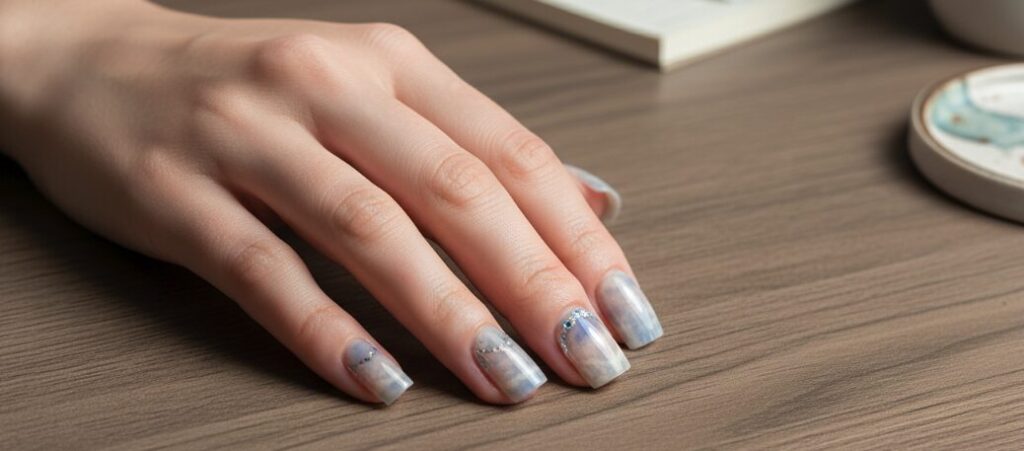
Ordinary nail polish and gel polish are completely two sets of physical/chemical systems. Ordinary nail polish relies on solvent volatilization-that is, the solvent in it must run into the air for the pigment and film-forming substances to harden. If you put it in a UV lamp, the heat generated by the lamp may have a little bit of accelerated volatilization, but it will never produce a chemical curing reaction. Because there is no “photoinitiator” in ordinary nail polish, it cannot trigger the polymerization reaction. The result of forced “baking” is often blistering or brittle on the surface, but the inside is still soft.
Nail polish gels contain 1 molecules called photoinitiators. When these molecules come into contact with a specific wavelength of light, a chemical reaction occurs, turning the liquid glue into a hard plastic material, a process we call “curing” (Curing). In practice, the wavelength emitted by the UV lamp must precisely match the “activation point” of the photoinitiator in the nail polish “. If the spectrum is too narrow or not strong enough, chemical bonds cannot form properly. I often see some nail art works look dry on the surface, but they will fall off after a little 1, or the whole piece will peel off after a few days. This situation is mostly “half-cooked”, that is, the light fails to completely penetrate and activate the photoinitiator at the bottom.
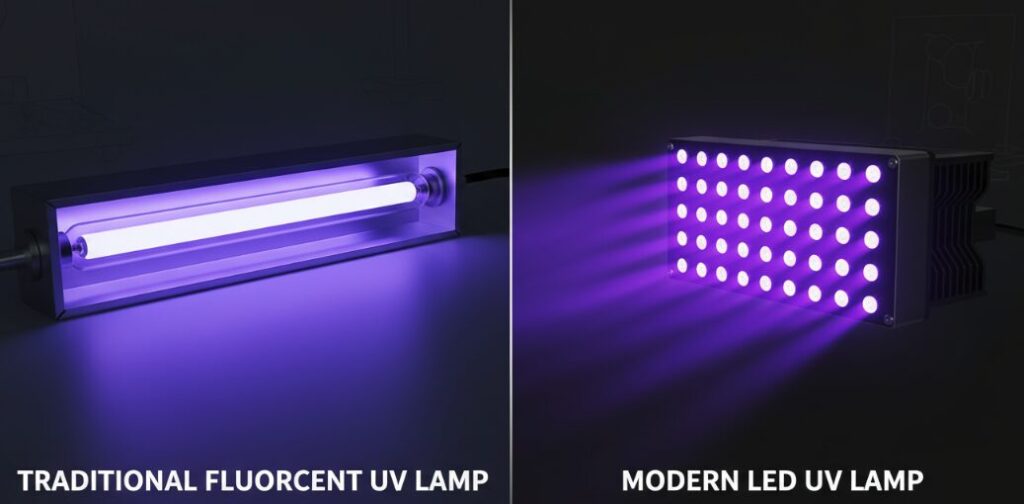
Having a clear idea of the device you have at hand is the key to judging compatibility. There are currently two main types of lights in the industry: Traditional UV lamp (fluorescent tube): This lamp emits “broad spectrum” ultraviolet light. Because of its wide spectrum, it can basically handle the vast majority of nail polish (including hard glue and removable glue) on the market. But its disadvantage is that the power is low, and each layer usually takes 120 seconds, which is really a test of patience. LED lamp: Strictly speaking, it is also the type of UV lamp, but the wavelength it emits is very concentrated and precise (narrow spectrum). It is extremely efficient and can be done in 30 to 60 seconds, but the problem is also here: some old formulas specially designed for traditional UV lamps may still be sticky after half a day under LED lamps. If you are using the current mainstream nail polish, they are mostly optimized for LED. But if you still insist on using the old UV lamp, you have to make sure your glue is not the kind of “high-speed LED curing only” special formula.
In order to avoid the frustration of peeling, cracking or not working, I will definitely do these things before I get started: Stuck on labels: Find out if there are words like “UV Compatible”, “LED/UV” or “Universal”. Recognize the system: figure out whether it is “air-dry” or “light-cured”. If the bottle does not mention the word “lamp”, then it is a high probability of ordinary nail polish. Follow the time given by the manufacturer: even bottle of “universal” nail polish may take 2 minutes under UV light and only 30 seconds under LED light.
Author: Elena Jenkins
With years of experience working in professional nail salons, I’ve seen every DIY mistake in the book—from ‘half-cooked’ gels to blistered regular polish. I believe that a great manicure is more than just an art form; it’s a piece of miniature chemical engineering.