 FSM-Nail


Search the entire website
Search
Search the entire website
To really effectively strengthen the nails just after removing the gel, we must immediately start a set of “defensive maintenance” process with “hydration” and “keratin repair” as the core. First, you must cut your nails short to reduce physical leverage and prevent painful breaks; second, use jojoba oil as the base finger oil at least three times a day to restore the flexibility of the dry deck; third, use a protein-rich (such as hydrolyzed wheat protein or keratin) fortifier every other day to rebuild the damaged structure, but be sure to avoid formaldehyde-containing hardeners, which will make nails brittle; finally, you must wear gloves when doing housework and strictly avoid contact with water, because for the porous nail bed at this time, water is the biggest destroyer.
Just after removing the gel, your original natural deck will be significantly thinner and softer than usual. If you try to retain the length at this time, you are actually adding great “leverage” to the fragile nail bed “.
When long, soft nails hit the surface of a hard object, the force exerted on the stress point will be amplified, causing the nail to bend painfully, or even directly from the depth of the nail bed. tear.
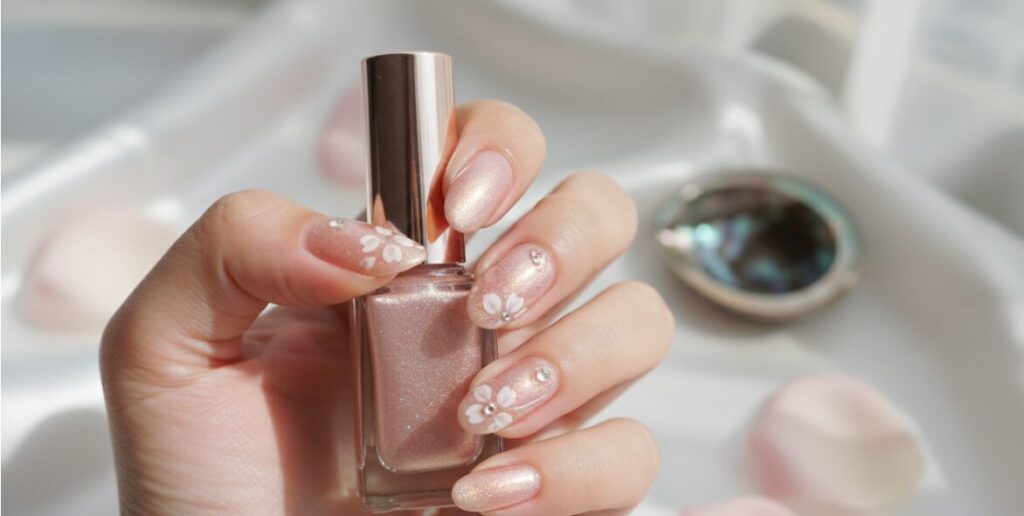
Therefore, shortening the nails-preferably to the level of the fingertips-can directly eliminate this leverage. Short free edge can provide a stable foundation for the growth of new nails, avoiding the continuous trauma caused by repeated bending. It is recommended to use a glass file with fine sand to trim the edges to ensure that there are no rough edges and corners to prevent further separation of the nail layer caused by hooking the clothes.
Rehydration is the cornerstone of postoperative recovery, but not all oils will achieve the effect. The reason why I have repeatedly stressed that we must give priority to the finger oil based on jojoba oil is because its molecular structure is the most special.
Jojoba oil is the closest component in the plant kingdom to human sebum (the oil naturally secreted by the skin). This similarity allows it to really penetrate the microscopic layers of the deck, rather than just float on the surface like other macromolecular oils.
Deprived of natural oils and moisture, the nail after removal of the nail becomes stiff and easily broken. Apply this oil at least three times a day to replace lost water. Adhere to massage the nail surface and cuticle, is in the conditioning keratin, let the nail to find the original elasticity.
When the length is controlled and the moisture is added, the next step is to solve the problem of the structural integrity of the nail. What you need at this time is a protein-rich nail enhancer .
Go to the ingredient list and look specifically for products that contain “hydrolyzed wheat protein” or “keratin. The mechanism of action of these ingredients is to fill tiny cracks and voids in the damaged deck, in effect putting up scaffolding to strengthen the nail structure. It is recommended to apply every other day to establish a protective layer.
But here is a very serious warning: be sure to read the label carefully, and the use of hardeners containing formaldehyde is strictly prohibited. Although formaldehyde can make nails instantly hard to the touch, it does so by crosslinking keratin too tightly. The result is that although the nails are hard, they are as brittle as glass and shatter 1 they are touched. What we want is to build strength without sacrificing flexibility (which you get by applying oil).

The last line of defense in the rehabilitation process is environmental isolation. The porosity of the nail after removal of the gel is extremely high . Once in contact with water, they absorb water and expand like sponges, then contract when they dry.
This constant “expansion-contraction” cycle puts tremendous pressure on the already fragile nail joint, directly causing the fingertips to delaminate and peel.
To prevent this, wear gloves when doing any water-related chores-such as washing dishes, washing the bathroom, or washing clothes by hand. Keep your nails dry so that the oil and protein treatments you applied before really stay in the deck and work, speeding up the healing process and preventing the side effects of moisture saturation.
Author: Elena Ross
As a licensed nail technician specializing in natural nail rehabilitation, I focus on science-backed recovery methods. My approach prioritizes the “repair and protect” philosophy—emphasizing deep hydration with jojoba oil and keratin restoration—to help you effectively strengthen your nails after gel removal.